Renovating an Older Southern Maryland Home: Handling the Debris
Waldorf grew from a Southern Maryland railroad and tobacco-country crossroads, and Charles County is dotted with older farmhouses and tobacco-era homes - many now being renovated a
In this guide
- Why an older-home rehab is different
- Placement on older and rural lots
- What comes out of an older house
- The rules that apply
- Clearing a restoration well
Waldorf grew from a Southern Maryland railroad and tobacco-country crossroads, and Charles County is dotted with older farmhouses and tobacco-era homes - many now being renovated as the DC-commuter belt grows. Renovating one of these older homes throws off a particular kind of debris, and clearing it well takes some local know-how.
Why an older-home rehab is different
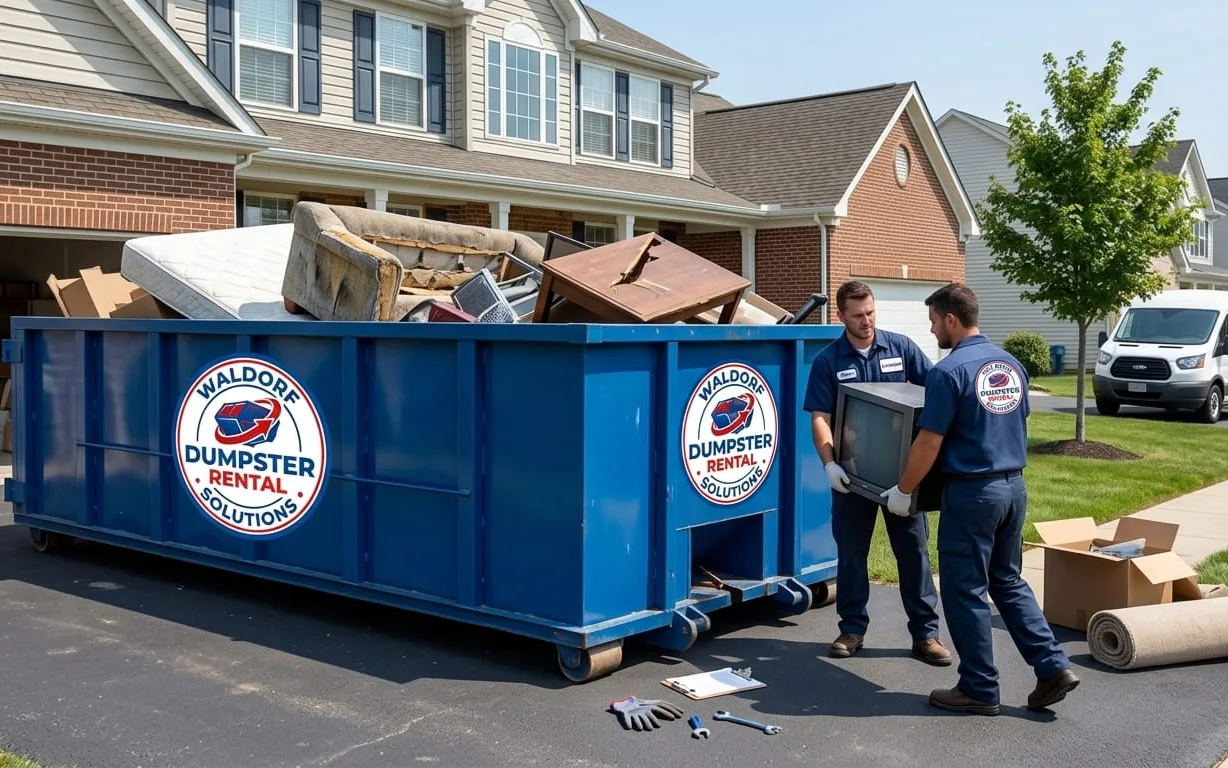
A renovation of an older Charles County home produces heavy, mixed debris: old plaster and lath, brick, cast-iron radiators and pipe, layers of flooring, and dense demolition material that a newer subdivision house never yields. Plaster and brick in particular are heavy, so weight caps the load fast.
That mix means we often size a bit smaller than the volume suggests - a 20 yard filled properly rather than a 30 that goes overweight - and sometimes a dedicated box for the heavy plaster and masonry.
Placement on older and rural lots
Older homes around La Plata, Port Tobacco and the tobacco-country roads sit on varied lots - some tight in-town, some open and rural but with soft, wet ground near the creeks. Placing a container there takes care, and an in-town lot in La Plata may need a county street permit, which we help arrange.
We scout the spot, plank to protect older sidewalks and drives, and position the box on stable ground so a loaded truck can reach it.
What comes out of an older house
Some of what a rehab produces needs special routing: old appliances with refrigerant need it recovered first, cast iron and metal can be pulled for scrap, and anything with lead paint or asbestos needs proper abatement and handling - not the container.
Salvageable period details - mantels, doors, hardware, trim - are often worth setting aside for reuse or resale rather than dumping, and we're glad to work around a salvage plan.
The rules that apply
Construction and demolition debris from the rehab goes to the Charles County Landfill on Billingsley Road, not the curbside pickup or Tag-a-Bag, and it can't be burned under Maryland's open-burning restrictions. Clean brick and wood are pulled for recycling to trim the per-ton cost.
For a phased restoration that runs for months, we set flexible rental windows so the box is there when you need it and gone when you don't.
Clearing a restoration well
Tell us the house and the phase - a full gut, a floor at a time, a roof and facade - and we'll size the container, plan the placement and any permit, and keep swaps moving so the work never stalls on a full box.
Bringing Charles County's older homes back to life is some of the best work around, and we're glad to be the hauler behind it.
Book a container in Waldorf
One flat rate covering delivery, seven days, pickup and disposal.
(240) 222-1490Questions readers ask about this
What size dumpster for an older-home gut-rehab?
Often a 20 yard filled properly, or a dedicated smaller box for the heavy plaster, brick and masonry, because older-home debris is dense and weight caps the load before volume. We size to the phase.
Do I need a street permit?
Sometimes - an older in-town lot in La Plata with no off-street parking may need the container in the street, which requires Charles County's sign-off. We help arrange it.
What about lead paint or asbestos?
Those need proper abatement and handling, not the container. We'll flag what can't go in the box and help you route it correctly before we load.
Can I keep the box for a long restoration?
Yes. For a phased, months-long restoration we set flexible rental windows and keep swaps moving so the box is there when you need it.